
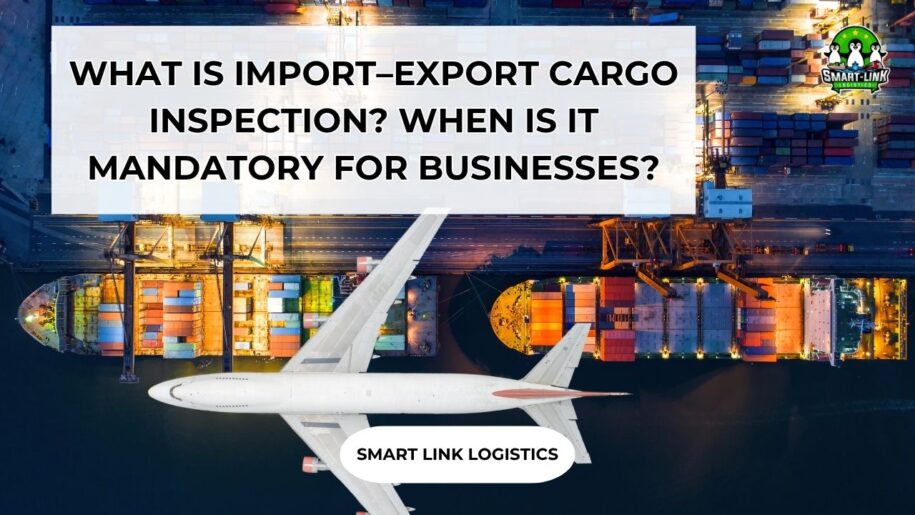
WHAT IS IMPORT–EXPORT CARGO INSPECTION? WHEN IS IT MANDATORY FOR BUSINESSES?
In international trade, the geographical distance between buyers and sellers inherently creates risks related to the quality, quantity, and condition of goods. Many companies encounter situations where the goods received do not match the agreed specifications, or disputes arise without sufficient legal evidence to resolve them effectively.
For this reason, cargo inspection in import and export activities has become a critical step that helps businesses control risks and protect their interests in cross-border transactions. The following article provides a comprehensive overview of what cargo inspection is, when it is required, and how to implement it effectively in practice.
What Is Import–Export Cargo Inspection?
Import–export cargo inspection refers to the process of examining, evaluating, and verifying the actual condition of a shipment in terms of:
-
Quantity
-
Quality
-
Specifications
-
Packaging
-
Degree of damage or loss
This assessment is conducted in comparison with the terms agreed in the international sales contract or relevant technical standards.
Cargo inspection is carried out by an independent third party, typically a professional inspection company. The results are documented in an inspection certificate, which holds legal validity in various situations, including:
-
International payment procedures, especially under letter of credit (L/C) transactions
-
Settlement of commercial disputes
-
Supplementing customs documentation
Under the provisions of Vietnam’s Commercial Law 2005, inspection is recognized as a commercial service aimed at determining the actual condition of goods at the request of a client.
In simple terms, if the international sales contract represents the commitment between two parties, cargo inspection serves as the mechanism to verify whether that commitment has been fulfilled.
The Role of Cargo Inspection in International Trade
Some businesses may choose to skip the inspection step to reduce costs. However, in practice, inspection is one of the most effective measures to prevent significant financial losses.
Protecting Interests in International Payments
In letter of credit transactions, banks often require an inspection certificate to confirm that the goods have been delivered in accordance with the contract. Without this document, payment may be delayed or even refused.
Providing Legal Evidence in Case of Disputes
If goods are damaged, missing, or fail to meet quality standards, companies need legally valid evidence to file claims against shipping lines, insurance providers, or suppliers. The inspection certificate serves as a crucial basis for determining liability and compensation.
Meeting Regulatory Requirements
Certain categories of goods, such as used machinery, scrap materials, or high-risk cargo, are subject to mandatory inspection before customs clearance. Failure to provide an inspection certificate may result in the shipment being denied clearance.
When Is Cargo Inspection Required?
Not all shipments require inspection. However, in many cases, it is either mandatory or highly recommended.
Mandatory Inspection Cases
Businesses are required to conduct inspection in accordance with government regulations in situations such as:
-
Importing used machinery and equipment to determine age and production standards
-
Importing scrap materials to verify contamination levels and environmental compliance
-
Shipments that require accurate HS code determination for customs declaration
Without a valid inspection certificate, the shipment may not be cleared through customs.
Inspection at the Company’s Discretion
Even when not mandatory, companies should proactively arrange inspection when:
-
Goods show signs of damage or deformation upon arrival at the port
-
Disputes arise regarding quality or quantity
-
The contract stipulates an inspection certificate as a condition for payment
-
Bulk cargo volume needs to be determined through draft survey measurement
Timely inspection helps businesses minimize risks and protect their financial interests.
Common Types of Cargo Inspection
Depending on the intended purpose, businesses can select appropriate types of inspection services.
Quality Inspection
This type of inspection evaluates technical specifications and product characteristics to determine whether the goods meet contractual standards.
Quantity and Weight Inspection
Inspectors verify the number of packages or determine the actual weight of the cargo, which is particularly important for bulk shipments.
Packaging and Marking Inspection
This inspection assesses the condition of packaging and labeling to ensure safe handling and transportation.
Damage Survey
A damage survey determines the extent and cause of loss or damage, supporting insurance claims and liability assessment.
Origin Verification
Inspection may also be conducted to verify the origin of goods and ensure that declared information is accurate.
Lashing and Securing Inspection
This is applied to oversized or heavy cargo to ensure that goods are properly secured on transport equipment, reducing risks during transit.
Detailed Cargo Inspection Process
To ensure effective inspection, businesses should understand the standard procedures involved.
Step 1: Submitting an Inspection Request
The company submits a request to an inspection agency along with supporting documents, including:
-
International sales contract
-
Commercial invoice
-
Packing list
-
Bill of lading
-
A clear description of the inspection scope
Step 2: Inspection Planning
The inspection company determines the location, timing, and assigns qualified inspectors to carry out the assessment.
Step 3: Conducting the Inspection
Inspectors examine the cargo on site, record its condition, take photographs, and collect samples if necessary. Businesses are advised to assign representatives to attend the inspection to ensure transparency.
Step 4: Issuance of Preliminary Results
In urgent cases, the inspection agency may provide preliminary findings to support timely customs clearance or operational decisions.
Step 5: Issuance of the Final Inspection Certificate
After completing all analyses and verifications, the inspection agency issues an official inspection certificate with full legal validity.
Who Bears the Cost of Cargo Inspection?
In international trade practice:
-
The party requesting the inspection typically bears the cost
-
In letter of credit transactions, the buyer often pays for inspection services
-
If the inspection results reveal that the goods do not comply with contractual terms, the seller may be required to bear the costs and provide compensation
To avoid disputes, the allocation of inspection costs should be clearly specified in the sales contract.
Important Considerations When Conducting Cargo Inspection
To ensure effective results and avoid unnecessary risks, businesses should:
-
Select licensed and reputable inspection companies with proven expertise
-
Clearly define the scope and objectives of the inspection request
-
Preserve the original condition of goods when damage is detected
-
Arrange inspection promptly as soon as abnormalities are identified
-
Apply synchronized inspection for equipment imported as part of a complete production line
Conclusion
Import–export cargo inspection is not merely a technical procedure; it is a vital tool that helps businesses manage risks and safeguard their rights in international trade. By implementing proper inspection practices, companies can enhance transparency, prevent disputes, and ensure smoother, more secure cross-border transactions.
If you’re looking for the best import-export solutions, feel free to contact us for detailed consultation. If you need legal support or assistance with customs procedures in import-export activities, please contact Smart Link Logistics for fast and efficient consultation. With over 15 years of experience in the transportation field, we are proud to accompany you throughout your journey.
Hotline: + 84 902 964 982 to know more about our services

If you require assistance with international import and export of goods, please contact our team at Smartlink Logistics. We are available to provide you with professional guidance on our services and the necessary customs procedures.
SMART LINK: BEST SERVICE BEST YOU
 SMART LINK LOGISTICS
  215-217 Tran Hung Dao, Co Giang Ward, Dist 1, Hochiminh, Vietnam
 Hai Phong Branch Da Nang Branch Ha Noi Branch
 Air Freight,
  Sea Freight,
  Custom Clearance,
  Warehouse,
  Trucking
  For sea freight, airfreight, express, customs….