
IMPORTING DANGEROUS GOODS: MSDS – IMDG – LICENSES AND MANDATORY CONSIDERATIONS
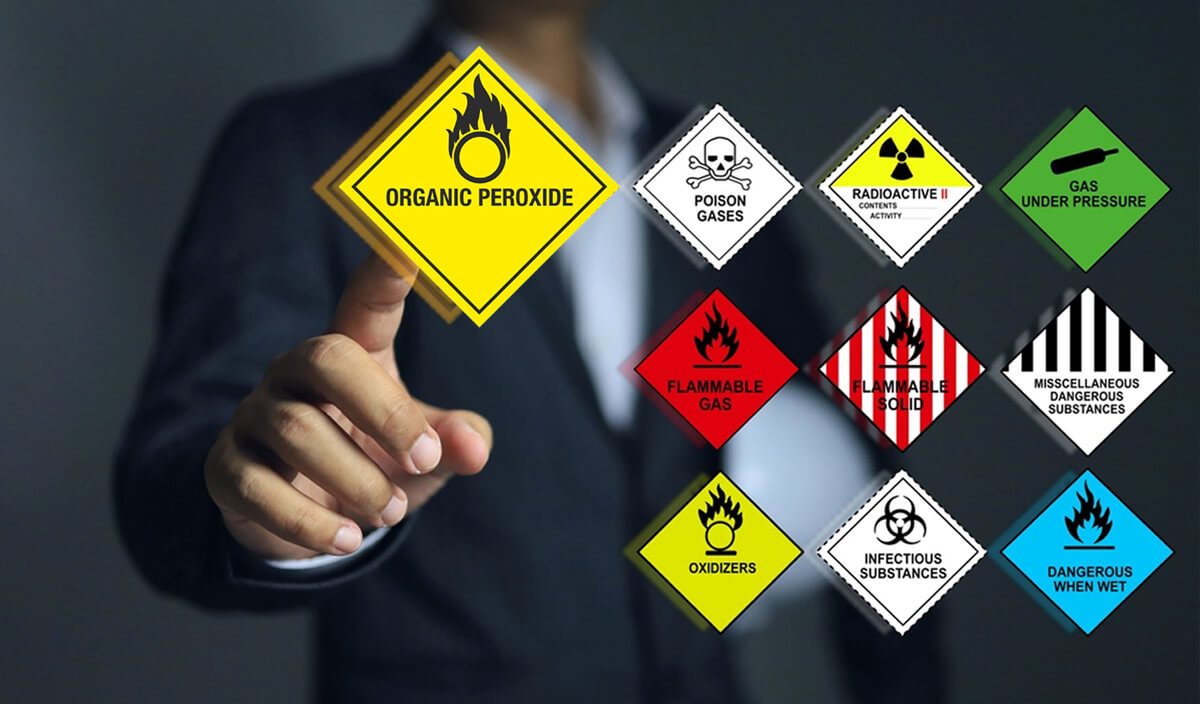
Importing dangerous goods is one of the most specialized and high-risk segments in international trade. Although this category of goods often offers attractive profit margins, even a minor error in documentation, labeling, or licensing can result in cargo being held at port, significant additional costs, administrative penalties, or even mandatory destruction of the goods.

In practice, many shipments are delayed not due to freight rates or vessel schedules, but because businesses lack a proper understanding of MSDS documentation, the IMDG Code, or licensing requirements applicable to dangerous goods. The following article provides a comprehensive overview of what constitutes dangerous goods imports, the mandatory documentation required, the import process, and key considerations to ensure safe, lawful, and cost-effective handling of DG shipments.


1. What Are Dangerous Goods Imports?

Dangerous Goods (DG) are substances or materials that pose potential risks to human health, the environment, transportation safety, or national security during storage and transport.

When importing dangerous goods, shipments are governed not only by Customs Law but also by:

  • International conventions such as the IMDG Code for sea transport and IATA DGR for air transport

  • Relevant decrees and circulars issued by Vietnamese regulatory authorities

Common examples of dangerous goods frequently imported include:

  • Lithium batteries, rechargeable batteries, and power banks

  • Paints, solvents, and industrial chemicals

  • Perfumes, aerosols, and compressed gases

  • Fireworks, explosives, and explosive precursors


2. Mandatory Documentation for Importing Dangerous Goods

Unlike ordinary cargo, dangerous goods import procedures revolve around three core elements: MSDS, IMDG Code compliance, and import licenses.

2.1 MSDS – The Most Critical Document

MSDS (Material Safety Data Sheet), now commonly referred to as SDS (Safety Data Sheet), is the chemical safety document that can be considered the “identity card” of dangerous goods.

A valid MSDS must include:

  • Chemical composition and concentration

  • Hazard characteristics

  • UN Number (international identification number for dangerous goods)

  • Hazard Class

  • Packing Group (indicating the level of danger)

For dangerous goods imports, the MSDS must be provided prior to booking transportation and completing customs procedures. Vietnamese customs authorities generally require the MSDS in English; in some cases, a Vietnamese translation or a locally compliant chemical safety sheet may also be required.


2.2 IMDG Code – Mandatory for Sea Freight

The IMDG Code (International Maritime Dangerous Goods Code) sets international standards for packaging, handling, and transporting dangerous goods by sea.

For sea freight imports, shipping lines use the IMDG Code to:

  • Determine the stowage location onboard the vessel

  • Define safe separation distances from other cargo

  • Decide whether to accept or reject the shipment

If goods do not comply with IMDG Code requirements, the shipping line may refuse carriage at the booking stage.


2.3 Import Licenses for Dangerous Goods

Not all dangerous goods require import licenses. However, if the goods fall under specialized regulatory control, obtaining the appropriate license before importation is mandatory.

Common cases include:

  • Chemicals and explosive precursors: license issued by the Ministry of Industry and Trade

  • Weapons and explosives: license issued by the Ministry of National Defense or the Ministry of Public Security

  • Radioactive materials: license issued by the Ministry of Science and Technology

  • Medical chemicals and insecticidal products: license issued by the Ministry of Health

Businesses must review the applicable HS code and relevant legal regulations to determine whether a license or chemical declaration is required.


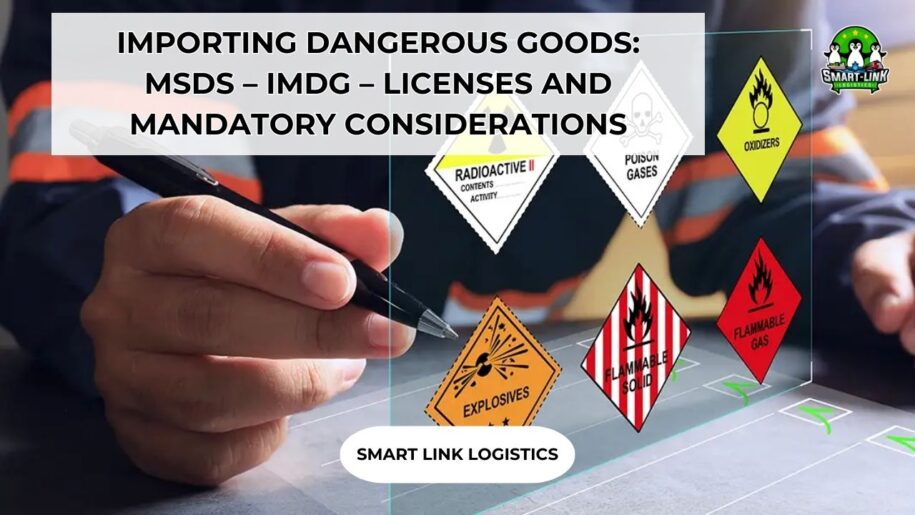
3. The 9 Hazard Classes of Dangerous Goods

Dangerous goods are classified into nine main categories, each with specific handling and transportation requirements:

  • Class 1: Explosives (e.g., ammunition, fireworks, flares).
  • Class 2: Gases (e.g., propane, aerosols, compressed oxygen).
  • Class 3: Flammable Liquids (e.g., gasoline, paint, solvents, perfumes).
  • Class 4: Flammable Solids (e.g., matches, phosphorus, calcium carbide)
  • Class 5: Oxidizing Substances (e.g., fertilizers, fiberglass repair kits).
  • Class 6: Toxic & Infectious Substances (e.g., pesticides, cyanide, medical waste).
  • Class 7: Radioactive Materials (e.g., medical isotopes, smoke detectors, density gauges).
  • Class 8: Corrosives (e.g., bleach, battery acid, drain cleaner).
  • Class 9: Miscellaneous (e.g., lithium batteries, magnetized materials, dry ice).
  •  


Accurate classification of the hazard class is a mandatory step in the dangerous goods import process.

The 9 Hazard Classes of Dangerous Goods

4. Detailed Import Procedure for Dangerous Goods

Step 1: Review MSDS and Determine HS Code

Carefully examine the MSDS, especially transport information, to identify the UN Number, Hazard Class, and Packing Group. At the same time, determine the correct HS code to understand applicable tax policies and regulatory controls.

Step 2: Obtain Import License (if required)

If the goods require a license, it must be obtained before shipment departure to avoid storage and demurrage charges upon arrival.

Step 3: Proper Packaging and Labeling

Packaging must meet UN standards for dangerous goods. Hazard labels must correctly display the appropriate Class, UN Number, and comply with international regulations.

Step 4: Book Transportation

The MSDS must be submitted to the freight forwarder or shipping line for transport approval. Freight rates for dangerous goods are typically higher than for general cargo due to DG surcharges.

Step 5: Customs Clearance and Inland Transport

Upon arrival, the importer must lodge the customs declaration and complete chemical declaration procedures if required. Inland transportation must be carried out by qualified vehicles and licensed drivers in accordance with regulations.


5. Common Mistakes in Dangerous Goods Imports

Frequent errors include:

  • MSDS information not matching the actual goods

  • Missing or incorrect hazard labels

  • Failure to declare chemicals prior to customs clearance

  • Underestimating regulatory requirements for lithium batteries and Class 9 goods

Such mistakes may result in cargo being held at port, substantial additional costs, or severe administrative penalties.


Conclusion

Importing dangerous goods requires strict compliance and professional handling. A clear understanding of MSDS documentation, IMDG Code requirements, licensing obligations, and import procedures is essential to minimize risks, control costs, and ensure legal compliance.

For businesses without prior experience handling DG shipments, partnering with a professional logistics provider from the outset is highly recommended to avoid unnecessary losses and operational disruptions.

If you’re looking for the best import-export solutions, feel free to contact us for detailed consultation. If you need legal support or assistance with customs procedures in import-export activities, please contact Smart Link Logistics for fast and efficient consultation. With over 15 years of experience in the transportation field, we are proud to accompany you throughout your journey.

Hotline: + 84 902 964 982 to know more about our services

If you require assistance with international import and export of goods, please contact our team at Smartlink Logistics. We are available to provide you with professional guidance on our services and the necessary customs procedures.

SMART LINK: BEST SERVICE BEST YOU

? SMART LINK LOGISTICS ?
?215-217 Tran Hung Dao, Co Giang Ward, Dist 1, Hochiminh, Vietnam
? Hai Phong Branch ? Da Nang Branch ? Ha Noi Branch
✈️ Air Freight, ? Sea Freight, ? Custom Clearance, ? Warehouse, ?Trucking
Hotline: +84902964982
Email: marketing03@smartlinklogistics.com.vn
Member: BNI, VCCI, VLA
———
✈️ ? For sea freight, airfreight, express, customs….
Smart Link Logistics could bring your cargo to the world.
Pro Vietnamese customs, Door To Door, FaceMask, Glove, Smart Link Logistics, Ocean Freight, Air Freight, Express, Amazon, Heart Service
#haiquan #xuatnhapkhau #duongbien #smartlinklogistics #cuocvantaiquocte #logistics #thongquan
partnerpartnerpartnerpartnerpartnerpartnerpartnerpartnerpartnerpartnerpartnerpartnerpartnerpartnerpartnerpartnerpartnerpartnerpartnerpartnerpartnerpartnerpartnerpartnerpartnerpartnerpartnerpartner