
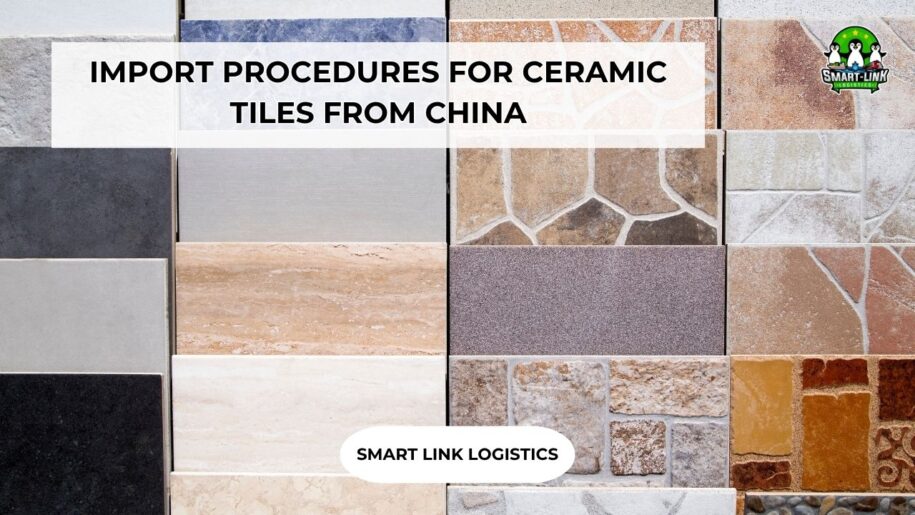
IMPORT PROCEDURES FOR CERAMIC TILES FROM CHINA – HOW TO MINIMIZE CUSTOMS CLEARANCE RISKS
In recent years, importing ceramic tiles from China has become a common choice for many Vietnamese businesses due to competitive pricing, a wide variety of designs, and a stable supply chain.
However, in practice, many companies encounter difficulties during customs clearance because they are not fully familiar with the import procedures for ceramic tiles, particularly the regulations related to construction material quality inspection.
A lack of experience in preparing documentation, determining the correct HS code, or conducting quality inspection can result in shipments being held at the port, leading to container detention charges and disruptions to business operations.
This article provides a comprehensive overview of the process of importing ceramic tiles from China, helping businesses proactively manage risks and optimize customs clearance time.
Import Policy and HS Code Classification for Ceramic Tiles
The first and most critical step in importing ceramic tiles is accurately determining the product’s HS code.
The HS code not only determines the applicable import duty rate but also directly affects:
-
Goods management policies
-
Quality inspection requirements
-
The set of documents required for customs clearance
If a company declares an incorrect HS code, it may face several risks, including:
-
The need to amend customs declarations
-
Requests for additional supporting documents
-
Extended customs clearance time
-
Administrative penalties
To avoid these issues, businesses should review product catalogues, technical specifications, or consult experienced logistics providers to determine the correct HS code from the outset.
Quality Inspection of Ceramic Tiles at the Manufacturing Plant
For certain product categories, quality inspection of imported ceramic tiles must be conducted directly at the manufacturing facility in China.
The inspection process typically includes:
-
Assigning an inspection agency to visit the factory
-
Evaluating the production process
-
Collecting product samples for testing
-
Issuing a quality inspection report
This report plays a vital role in demonstrating product compliance when completing import procedures in Vietnam.
Early-stage inspection helps businesses reduce the risk of receiving non-compliant goods and avoids situations where shipments must be re-exported or destroyed after arriving at the port.
Required Documentation for Importing Ceramic Tiles
To ensure smooth customs clearance, businesses must prepare a complete set of import documents in accordance with regulations governing construction materials.
The basic documentation set includes:
-
Import customs declaration
-
Sales contract
-
Bill of lading or airway bill
-
Packing list
-
Commercial invoice
-
Certificate of origin (C/O), if applicable
-
Registration for quality inspection of imported ceramic tiles
-
Certificate of conformity issued after inspection
-
Product catalogue or technical documentation
Among these, the registration for quality inspection is a mandatory requirement for many types of ceramic tiles imported into Vietnam.
Preparing all documents before the shipment arrives at the port helps businesses:
-
Shorten customs clearance time
-
Minimize storage and demurrage costs
-
Avoid requests from authorities for additional documentation
Step-by-Step Import Process for Ceramic Tiles from China
To import ceramic tiles efficiently, businesses can follow the standard process outlined below.
Step 1: Determine HS Code and Review Import Regulations
The company must identify the correct HS code and review all relevant regulations related to construction material quality inspection.
Step 2: Conduct Quality Inspection at the Factory
Perform product inspection at the source to ensure quality compliance before shipment.
Step 3: Sign the Sales Contract and Prepare Documentation
Agree on commercial terms with the supplier and request a complete set of required documents.
Step 4: Arrange Transportation to Vietnam
Select an appropriate transportation method, such as sea freight or road transport, depending on shipment volume and cost considerations.
Step 5: Register for Quality Inspection and Complete Customs Procedures
Submit the quality inspection registration to the competent authority and proceed with customs declaration to clear the goods.
Step 6: Receive the Goods and Finalize Documentation
After inspection and customs clearance are completed, the company takes delivery of the goods and retains documentation for potential post-clearance audits.
Practical Solutions to Minimize Risks When Importing Ceramic Tiles
To avoid complications during the import process, businesses should proactively manage key factors from the very beginning.
Effective measures include:
-
Reviewing import policies carefully before placing orders
-
Accurately determining the product’s HS code
-
Preparing all required quality inspection documentation
-
Conducting factory inspection when necessary
-
Cooperating with experienced logistics providers specializing in construction material shipments
In addition, companies should establish clear internal procedures for document control and interdepartmental coordination to reduce errors and improve operational efficiency.
Conclusion
Importing ceramic tiles from China offers significant business opportunities thanks to competitive pricing and abundant product availability. However, to ensure efficiency and avoid potential risks, businesses must fully understand the import procedures, prepare complete documentation, and strictly comply with quality inspection regulations.
By taking a proactive approach at every stage—from HS code classification and product inspection to customs clearance—companies can optimize costs, shorten clearance time, and enhance their competitiveness in the market.
If you’re looking for the best import-export solutions, feel free to contact us for detailed consultation. If you need legal support or assistance with customs procedures in import-export activities, please contact Smart Link Logistics for fast and efficient consultation. With over 15 years of experience in the transportation field, we are proud to accompany you throughout your journey.
Hotline: + 84 902 964 982 to know more about our services

If you require assistance with international import and export of goods, please contact our team at Smartlink Logistics. We are available to provide you with professional guidance on our services and the necessary customs procedures.
SMART LINK: BEST SERVICE BEST YOU
 SMART LINK LOGISTICS
  215-217 Tran Hung Dao, Co Giang Ward, Dist 1, Hochiminh, Vietnam
 Hai Phong Branch Da Nang Branch Ha Noi Branch
 Air Freight,
  Sea Freight,
  Custom Clearance,
  Warehouse,
  Trucking
  For sea freight, airfreight, express, customs….